Northeast Ohio Winter Roof Protection
Ice Dams: When Winter Turns Against Your Roof
Winter in Northeast Ohio can be unpredictable. Heavy snowfall, freezing temperatures, and sudden warmups can create the perfect conditions for one of winter's most damaging roofing problems: ice dams.
How Ice Dams Can Lead to Roof Leaks and Costly Water Damage
Winter in Northeast Ohio can be unpredictable. Heavy snowfall, freezing temperatures, and sudden warmups can create the perfect conditions for one of winter's most damaging roofing problems: ice dams.
For homeowners throughout Akron, Cuyahoga Falls, Bath, and surrounding communities, ice dams can become a serious concern when snow and ice accumulate along roof edges and gutters.
When melting snow becomes trapped behind an ice dam, water can work its way beneath roofing materials, potentially causing roof leaks, damaged insulation, and costly interior repairs.
At RPC Restoration, we believe understanding how ice dams form and knowing how to protect your roof are important steps toward preventing winter water damage.
What Causes Ice Dams to Form on Your Roof?
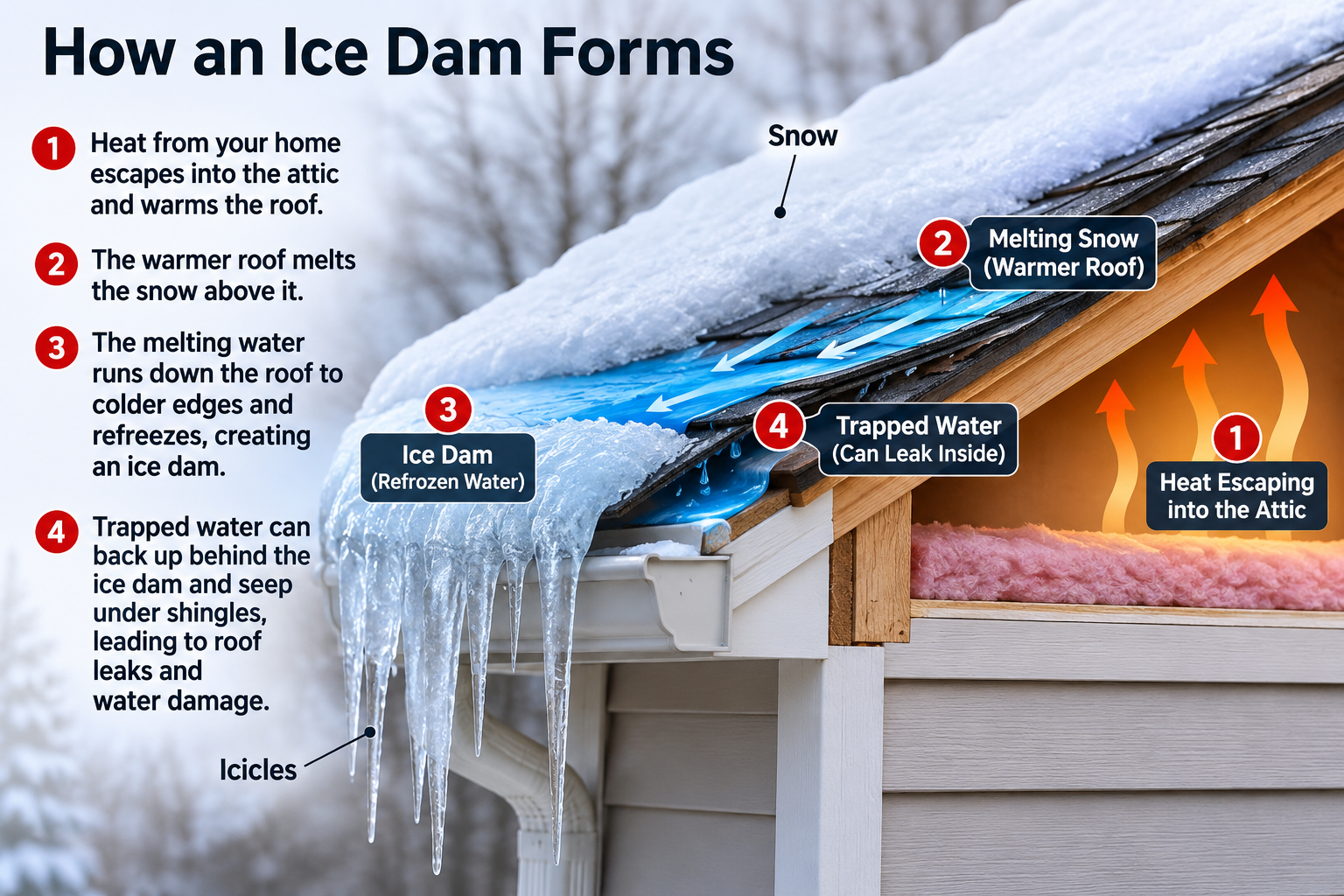
Ice dams develop when snow melts on warmer sections of your roof and refreezes near the colder edges.
This typically happens when heat escapes from your home into the attic, warming the roof deck and melting the snow above it.
As the water travels down the roof toward the colder eaves and gutters, it refreezes. Over time, ice accumulates and creates a barrier that prevents additional melting snow from draining.
Water trapped behind this barrier can eventually find its way beneath shingles and into your home.
Blocked Gutters
Gutters packed with ice cannot carry meltwater away, allowing water to pool along the roof edge.
Roof-Edge Ice Buildup
Thick ridges of ice or large icicles can signal a dam that is trapping water behind it.
Ceiling Stains and Leaks
Discolored ceilings, damp walls, or active drips may mean backed-up water has entered your home.
Shingle and Insulation Damage
Water forced beneath shingles can damage roofing materials and soak insulation, leading to costly repairs.
- Large icicles hanging from gutters.
- Ice buildup in gutters and downspouts.
- Moisture or dripping water inside the home.
- Peeling paint or damaged drywall near exterior walls.
Ice and Water Shield: Your Roof's Hidden Winter Defense
Water stains or drips near your eaves may signal an ice dam. Take these safe steps while you arrange a professional inspection.
One of the most important protective components of a roofing system is something homeowners rarely see.
It's called ice and water shield.
This self-adhering waterproof membrane is installed beneath roofing shingles to provide additional protection in areas vulnerable to water intrusion.
Ice and water shield is especially valuable along roof edges, where ice dams can trap melting snow and force water beneath shingles.
Ice and water shield doesn't prevent ice dams from forming. Instead, it provides an additional waterproof barrier that helps protect your home from water that may back up beneath shingles.
Proper installation is essential to its effectiveness.
How Do You Remove an Ice Dam from a Gutter?
Follow These Instructions To Remove Your Ice Dam
Removing an ice dam from a gutter requires caution because excessive force can damage gutters, shingles, and other roofing materials.
Avoid using hammers, axes, or sharp tools to break apart ice. These methods can cause additional damage and create dangerous conditions.
For significant ice buildup, professional removal is generally the safest approach. Roofing professionals may use specialized equipment, including low-pressure steam, to carefully remove ice.
The long-term solution is identifying and correcting the conditions causing the ice dam to form.
Consider Additional Ice Dam Prevention Solutions
Some homes experience recurring ice dams because of roof design, insulation problems, or other conditions.
Depending on the situation, solutions may include insulation improvements, ventilation corrections, additional waterproofing during roof replacement, or professionally installed roof heating cables.
For homeowners in communities such as Tallmadge, Stow, and Canton, where Northeast Ohio winters can bring repeated freezing and thawing, identifying the underlying cause is an important step toward preventing recurring problems.
A professional evaluation can help identify the appropriate solution.
How can an ice dam damage my home?
An ice dam can trap melting snow on your roof, allowing water to seep beneath shingles and into ceilings, walls, and insulation. Heavy ice can also strain gutters and fascia.
What should I do if I notice a leak during an ice dam?
Move belongings away from the water, contain drips if you can, and document visible damage with photos. Contact RPC Restoration for an inspection, and avoid climbing onto an icy roof.
Will homeowners insurance cover ice dam damage?
Coverage depends on your policy and the cause of the damage. Photograph the affected areas, review your policy, and contact your insurer. RPC Restoration can inspect and document the damage to support your claim.
Is it safe to remove an ice dam myself?
Chipping at ice or using a ladder near a frozen roof can cause injury and damage shingles or gutters. Have a qualified professional assess the buildup and recommend a safe approach.
How can I reduce the risk of future ice dams?
Keep gutters clear and address heat escaping into the attic. Proper insulation, air sealing, and roof ventilation can help limit the melting and refreezing that forms ice dams.
Concerned About Ice Dam Damage?
Don’t Wait for Ice Buildup to Become a Roof Leak
If you see heavy ice in your gutters, damaged fascia, or water stains indoors, request a professional inspection from RPC Restoration. We’ll assess the affected areas and help you understand your next steps.